

Diamonds hold the pride of place as most precious among all gemstones. They possess a dazzling array of technologically useful properties. Being the hardest, most thermally conducting, and chemically resistant among all known materials, diamonds have now also become a field of interest in the field of the electronics industry.
The Discovery of Triplet Spin Superconductivity in Diamonds
Diamonds have a firm foothold in our commercial world. The properties of the diamond often serve as metaphors for quality, purity, and hardness. Apart from the reputation of this rare material in the luxurious and decorative applications, these precious stones are also extremely valued in the industry where they are used to carve and polish other hard materials and develop radiation detectors.
About a decade ago, a group of scientists introduced high concentrations of boron to the diamonds and found astounding results-Superconductivity. Superconductivity is observed when two electrons with opposite spin form a pair, called Cooper pair, which results in zero electricals resistance in the substance. A high magnitude current flowing through the material can have advanced technological applications. As of now, very limited work has been done in investigating the nature of superconductivity in the diamonds.
Professor Somnath Bhattacharyya led new research in the School of Physics at the University of the Witwatersrand in Johannesburg, South Africa, which details the phenomenon of “Triplet Superconductivity“, observed in a diamond. Triplet superconductivity refers to the movement of electrons in a composite spin state rather than as a single pair. This phenomenon being highly tenuous has been observed in very few materials and only theoretically in them .
Magnetic fields and impurities destroy the superconductivity of traditional superconductors like aluminum. However, triplet superconductivity in a diamond remains unaffected even when combined with magnetic materials. Hence, a more efficient and multifunctional operation of material becomes achievable.
Bhattacharyya and his team worked with excitement for the practical evidence of triplet superconductivity in diamonds.
This is something that has never been claimed in precious stones like diamonds. Using a specialized piece of equipment called vapour deposition chamber, they can be manufactured in a laboratory. This owes the fact that naturally occurring diamonds are rare and hence expensive. The concerned university department has developed its own plasma deposition chamber. This allows them to manufacture diamonds of a higher than normal quality, ideal for high-end research.
Things that thrilled the Scientists !
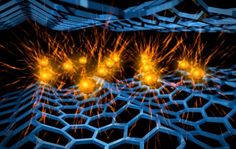
When considering the nanocrystalline boron-doped system, the reduced dimensionality and confinement effects have led to several intriguing observations. Of this most notably, signatures of a mixed superconducting phase. Scientists observed hallmark features of spin-orbit coupling (SOC) manifested as the weak anti-localization effect.
The enhanced SOC is believed to result from a combination of inversion symmetry breaking at the grain boundary interfaces along with antisymmetric confinement potential between grains, inducing a Rashba-type SOC. From a definite zero-bias peak in the differential conductance, they demonstrated signatures of a triplet component. This was believed to result from spin mixing caused by tunneling of singlet Cooper pairs through such Rashba-SOC grain boundary junctions.
They are now well regarded as quantum materials and now these findings expand the potential applications. Conventional technology is based on semiconductors which have electron charge. As of now, we are decently capable of controlling such charges. But gaining control over quantum states like superconductivity and entanglement would involve a lot more physics with the charge and spin of electrons. A surge of superconducting materials, one of which is diamond, could eventually replace the traditional silicon technology. Along-with low power consumption and cost-effective solutions can also be adopted with this novel technology.
With such innovative and extensive properties, Diamonds have always fascinated the scientists.
[…] as a superconductor, add too much and the material will metalize at pressures that can crack any diamond anvil. It’s just like adding salt to your food. Along the way, the team smashed dozens of […]
[…] Find out more about capability of diamonds and their amazing properties like this, here. […]